
Church, Are We Just Gathering or Growing?

There is a problem in the church that many are hesitant to admit.
We are not just observing the problem, we are a part of it. But by God’s grace, we are fully equipped to also be a part of the solution.
I want you to know that this is not meant to be a negative or critical message. There is enough of that out there. This is a loving message because we cannot fix what we refuse to bring into the light of God’s truth.
The Broken Cup in The Church
We have an illusion of health in Christianity. Our churches are full. People show up each week. They love Jesus. They serve. They support their church faithfully.
On the surface, everything looks wonderful and inspiring. Yet, if you look closer, something deeper is missing.
We are trying to drink from a broken cup – and many of us don’t even realize it. The crack in our cup is two-fold, and, as with many biblical things, they go hand-in-hand. It is:
Biblical illiteracy
A lack of true discipleship
Far too many of us secretly question why we don’t feel full or why we feel so spiritually dry, even after attending a service. But we don’t say it out loud or even linger with those thoughts for long.
Instead of addressing this crack, we cover it, and pretend it’s not there. Oftentimes, it is because we don’t want to seem disloyal to our church and its leadership. So we go to service each week, sit down and listen, maybe even take some notes, get up and go about our day. We may not have even understood what the Pastor was getting at, but we pretend we do and move on unchanged.
I’m sure I am not the only one who has left the church pretending.
But Jesus had strong words about pretending…and none of them were positive. God never calls us to pretend. He calls us to walk in truth and love.

Time with other believers should never replace our time with God. Both are a blessing!
A Personal Observation
From my earliest memories of being a born-again Christ follower, I could see basic Christian skills such as how to read and study the Bible and discipleship were missing from most churches. Yet, I've never stopped looking for them.
Over the years as I was searching for a church home, I often looked online at churches in a nearby town. Out of nearly 100 churches, only one clearly mentioned discipleship. Most had Bible study groups. Two had how to study the Bible classes. If the other churches offered these things, it wasn’t visible.
That should give us pause. It sure did me.
A Crack in Our Cup: Biblical Illiteracy
This matters because many believers show up to church each week. Yet, they are not growing spiritually. Not because they don’t care or love Jesus, but because they have never been taught how to study Scripture for themselves. They show up, sit and listen, and leave to resume their lives.
As a result, we have created a culture of spiritual dependence and stunted the growth of many Christ followers.
Sure, we share Scripture through sermons, offer cross-references, and share our commentary on the subject. But that is all passively receiving the Word. There is little expectation for us to dig for biblical treasure or gather spiritual manna for ourselves. However, Scripture calls us to something deeper than simply receiving:
“Study to show thyself approved unto God, a workman that need not be ashamed, rightly dividing the word of truth.” (2 Timothy 2:15)
Look at that verse. Study for yourself. This is what God approves of. Be a workman of the word of truth so that you will be able to observe, interpret, and apply Scripture to your life. As you develop that skill, you will have no need to feel embarrassed or ashamed of your biblical knowledge.
There is a difference between hearing the Word and handling the Word. As a church, we have to make a greater effort to get past just hearing the Word and begin teaching how to handle the Word. If we don’t teach how to apply Scripture, the verses hold little meaning except to make cute coffee mugs.
Don’t get me wrong. Listening to someone teach or explain is fine. It’s a blessing. Teaching and preaching are spiritual gifts, and we can all learn from each other. However, my point is that time learning from other believers should never come before or replace time alone with God and His Word.

Listening without studying for yourself is not transformative. Proximity to other believers is not growth. But combined together, they are powerful!
A Crack in Our Cup: The Absence of True Discipleship
People are hungry, but not just for knowledge. They crave guidance and fellowship. They want to know how to live out Scripture; how to grow spiritually, how to walk in their God-given purpose, and how to apply Scripture to their situation. They want to see how God makes the Bible relevant to today.
Much of that knowledge can be found in one-on-one discipleship. True discipleship is more than teaching someone what your church believes. It is teaching someone what Jesus said and did, who He is, and how to study Scripture for themselves so that being spoon-fed is no longer necessary.
Some teach that discipleship happens naturally, like fruit appearing on a tree, as Christians gather together each week. A popular saying is that learning to be a follower of Christ is caught, not taught. But we all know believers who have attended church for years and have an active social life but remain spiritually stagnant. So that saying cannot possibly be true.
Scripture shows us that spiritual growth requires intention and attention. It doesn’t happen by accident, nor is it passively transferred from person to person through fellowship. In the book of Titus we are given clear instructions on the discipling process for the various demographics to encourage spiritual growth.
Fellowship and discipleship are not the same. Jesus didn’t say, “Go and gather in fellowship.” He said, “Go and make disciples.” To be clear, that means to make disciples of Jesus, not disciples of our church.
Making disciples is what Jesus did. He knew his time on this earth was short. Yet, he took the time to speak with people and to teach. He was very good at letting them know that he saw them, heard them, and, regardless of their issues, they mattered. God is intentional, personal, and relational.
He expects His followers to be the same.
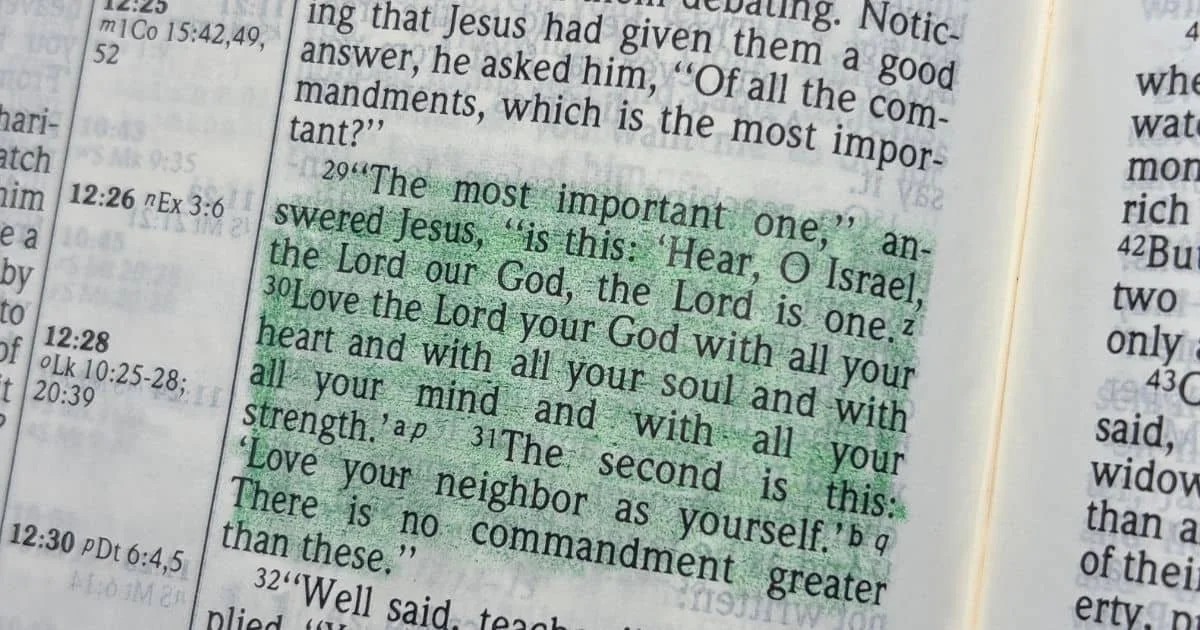
Love the Lord your God with all your heart and love your neighbor as yourself.
The Consequence of a Cracked Cup: Lack of Growth and Maturity
As much as we resist the idea, we were created to be followers. We will follow what is placed in front of us. If the church does not step up and begin teaching how to study Scripture for ourselves and disciple biblical application of Scripture, the world will continue to step in and happily do it for us.
When that happens, we see the culture mirrored in our homes and churches. Encouragement to be set apart quietly goes away. That’s when we see Christians following cultural trends instead of truth to justify their choices.
The natural progression of this is that our people often struggle with feeling spiritually stagnant, empty, and needing basic foundational food like milk even though they attend church faithfully.
Hebrews 5:12-14 reminds us that a newborn baby needs to be fed milk and taken care of. We know that eventually they should move to soft food then harder food such as meat. Growth and maturity require time and training to digest solid food.
A Christian isn’t automatically equipped to feed themselves or make wise food choices. They have to be taught so that they can go from basic foundational issues to deeper, more complex teachings.
In 1 Corinthians 3:2-5, Paul reprimanded the church because they had not grown into spiritual maturity. They were relying on the church and its leadership to feed them instead of growing in personal maturity and learning to feed themselves.
We have the same issues today.
So, What’s The Solution?
What can we do about this problem? It is so easy to point fingers. Some blame leadership. Some blame the congregation. Maybe instead of assigning blame, we should each ask where we can step in and help be a part of the solution.
One person can help another learn to study Scripture and how to apply it through discipleship. That freaks many people out, but a degree or platform is not needed. All that is required is a willing heart, a love for the Lord, and a love for others.
But it can’t stop there. That person can then turn around and help someone else. This is how Christians grow spiritually and discipleship multiplies. This is how we can shine our light of love into the world’s darkness.
As a church, it is critical that we take our cup to Christ Jesus for restoration. Only He can make whole what we have broken. However, we must also do our part because faith without works is a dead faith.
A biblical path towards restoration and a stronger church body is possible if we consistently combine the faithful teaching of Scripture with intentional discipleship. One person at a time, one church at a time.
I truly believe that it is not too late to see something powerful: a church that is not just gathered but transformed through power, love, and sound biblical thinking!
“For God has not given us a Spirit of fear, but of POWER, LOVE, and a SOUND MIND.”
(2 Timothy 1:7)
Journaling Reflection Questions
When you read Scripture, do you slow down enough to meditate on it, or do you rush to consume more and meet your reading goal?
Think about a time when someone intentionally poured into your spiritual life (a mentor, teacher, or discipler). How did that relationship shape you? If you have never had that experience, what has the absence cost you spiritually?
Examine your life closely. In what ways might you be trying to fill your spiritual hunger with things other than God’s Word?
The post closes with the reminder that faith without works is dead. As you reflect on biblical illiteracy and the absence of discipleship in the church, what is one specific, actionable thing God may be calling you to do — not the church, not leadership, but you — in response to what you have read?





Discover three powerful ways to understand the letters for the seven churches in Revelation chapters 2 and 3.