
When Self-Care Feels Selfish: A Biblical Approach to Stewardship in Midlife
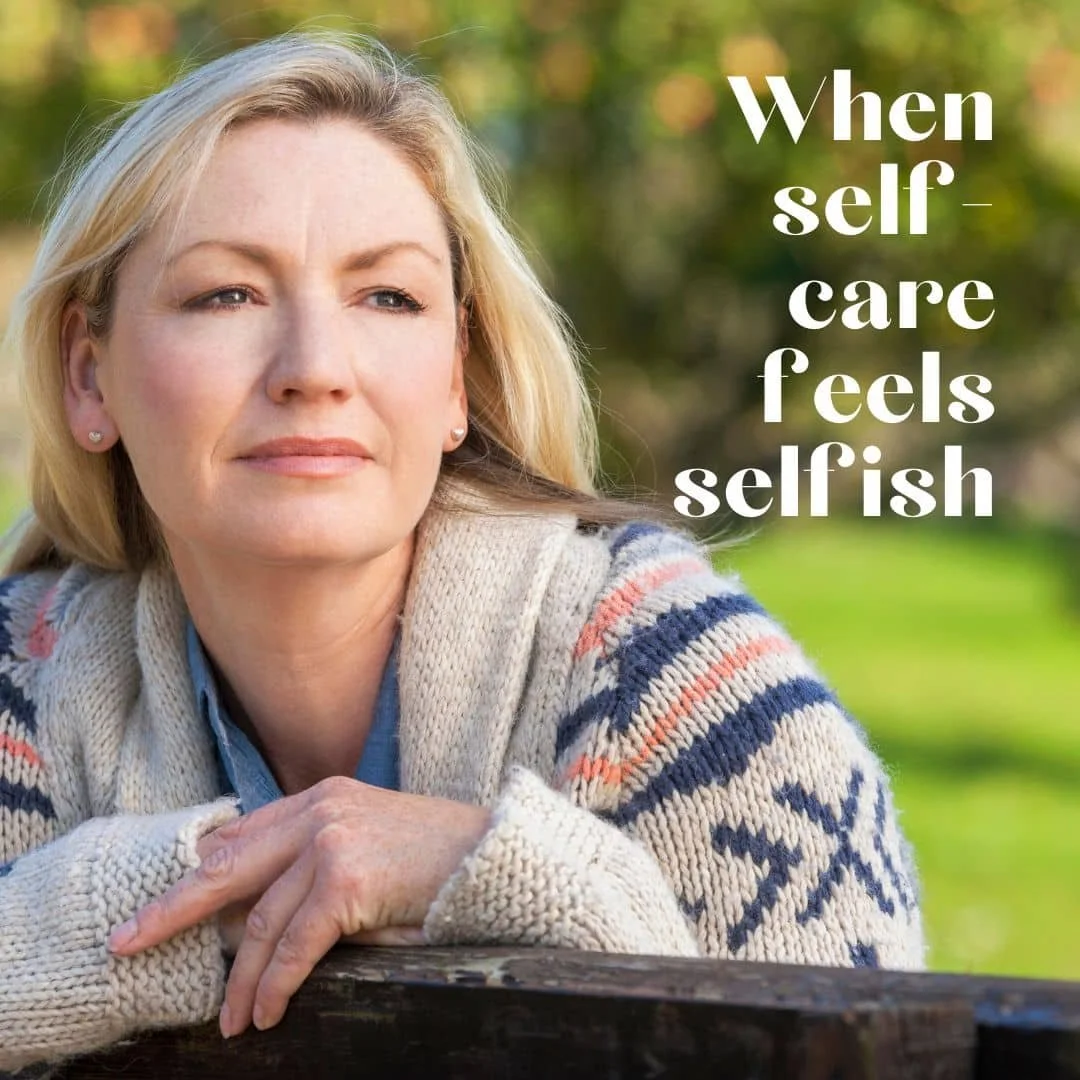
Self-care is stewardship because YOU are God’s most valuable resource!
Self-care is a topic I have struggled with for years. For a long time, I didn’t see it as something good. I saw it as selfishness and indulgence. It felt like stepping away from responsibilities to do something just for myself. Whether it was a massage, manicures, or long bubble baths, the focus was always the same: me.
I didn’t want that. Besides, focusing on myself just didn’t sit right with my understanding of Scripture.
As I’ve gotten older, especially after losing my thyroid and navigating autoimmune issues, I realized some things about my lifestyle had to change. Midlife has a way of revealing what we could once push through but can no longer ignore.
For many of us in this season – whether we are navigating an empty nest, going through menopause or another health issue, or simply seeking a slower pace of life – we are forced to reevaluate how we live our days. There are no clear roadmaps or “how-to” guides for this season of life. Although I did the best I could, I made a mess of things.
But I still didn’t know what to do to make things better.
Two phrases I often heard in support of self-care were that you couldn’t pour from an empty cup and that our bodies are temples of the Holy Spirit. But I couldn’t wrap my head around how either of those statements applied to my daily self-care. I knew God wasn’t looking for a perfect vessel and He could use me in any condition, so those truths alone didn’t answer my deeper question:
What does it actually look like to care for my body in a way that honors God?
Three Biblical Principles To live By
I began a study in my Bible looking for answers. What I didn’t find in Scripture was a step-by-step self-care plan. What I found instead were biblical principles (timeless truths) I needed to help me apply godly wisdom. Through applying these principles, I have found the balance that I need to fulfill the purpose God has created me for.
The Principle of the Inner Man
God looks at the inside of a man. He looks at the heart because our motives matter. It’s not about what I do, but why I do it.
God doesn’t care if I take a 5-minute shower or an hour-long soak in an herbal-scented bubble bath. He is interested in my reason for doing it. Am I taking that hour-long soak to escape from the demands of my family? Or am I taking that hour-long soak because my joints and muscles ache and the heat and Epsom salt are helping me physically?
Scripture References: 1 Samuel 16:7, Proverbs 21:2, Matthew 23:25-26

Come to me, all who labor and are heavy laden, and I will give you rest. —Matthew 11:28-30
The Principle of Stewardship
Everything I have – my body, time, and energy – is entrusted to me by God. God is the owner of everything; I am the caretaker. Managing our lives in a godly way gives Him glory. Am I making the most of the time I have been blessed with or am I drifting through my days on autopilot, distracted by things like social media? God has a purpose for my days. One day I will be called to give an account of my actions to God.
Scripture References: Psalm 24:1, Matthew 25:14-30
The Principle of Rest
God built rest into all of creation. We know that winter is a time of rest and a natural slow down for nature. God himself rested on the seventh day of creation. Jesus made a point of taking time away from the crowds to rest.
I can go and do, pushing myself until there is nothing left to push with. And many of us do. But I must give my mind and body time to recharge. Am I doing and going nonstop because, in my mind, nobody else can do them as well as I can?
Sometimes our refusal to rest can be rooted in pride, fear, or the belief that everything depends on us. Whatever our reason, we need to give it to God in repentance. It is His desire that we find rest in Him.
Scripture References: Genesis 2:2, Matthew 14:23, Psalm 127:2.

God doesn’t care if you have a 5-minutes shower or an hour-long soak. He cares about your motivation.
The Biblical Self-Care I Implemented in My Daily Life
With gentle conviction and loving kindness, God began to show me where changes were needed. What followed weren’t quick fixes, but slow, intentional shifts – rooted in the biblical principles above – that reshaped my mindset, my rhythms, and my boundaries.
My responsibilities look different than they once had, but that doesn’t make them less valuable. It just means I need to steward this season differently. These principles helped.
Mindset Shifts for Emotional Health
Comparison is a form of judging: We often think of judging others, but what about when we judge ourselves by comparing? When I compare, I never “win.” The critical voice in my mind made sure of it. So I had to stop comparing my days and productivity levels to friends or what I saw on social media.
But also, I had to stop looking at the choices others made to take care of themselves and judging them harshly as self-centered. Neither comparing myself nor judging others was helping my mental self-care.
Sought Joy Through Thankfulness: With midlife, I suddenly had countless opportunities to feel unseen. When I saw that feeling for the lie it was, I became determined to train my mind to look at things differently. I wanted to look for reasons to be thankful instead of focusing on the negative. Reading and praying David’s Psalms played a significant role in learning to live a life of gratitude and joy.
Perhaps I felt unseen because I was rushing to get my chores done. Maybe, in my rushing around, I was inadvertently making others feel invisible as well. So instead of rushing through my days trying to check off my lists, I had to slow down to see the small things that brought me joy, such as a sunrise, a beautiful flower, or the smile from my grandchild.
Much of this season of life happens quietly, behind the scenes. We may feel unseen by others, but we are never unseen by God.
Nurture Spiritual Health
Abide and Seek: God calls us to abide in Him and to seek Him first. I made a point of starting my day with God before anything else. Not just in prayer, but also with reading and studying the Bible and journaling.
Things Above: Because I had an issue with negative thoughts, I had to intentionally guide them as taught in Philippians 4:6-8. One thought at a time, one day at a time I learned to meditate on what is right, good, true, and lovely when the lies of the enemy threatened to take hold.
Vision: Something I was missing was a vision for how I desired my days to flow. Over the years, I slowly lost my focus. I was having trouble finding my purpose in my new stage of life. After spending time with God during a fast, I sat down and wrote out what I was hoping to achieve each day. This self-care plan was the result.
Daily Rhythms for Physical Health
Stewardship of my time: Age changes us. For years I maintained a strict schedule that mirrored my husband's work schedule. Now I had to give myself permission to change up my routine as my needs and circumstances changed. What works for me today might not work for me next week, and I had to learn to be okay with that.
When I was sick, extra tired, stressed, or feeling overwhelmed, my schedule had to be more flexible. That didn’t mean I was being irresponsible; I was showing myself grace. On those days, depending on my energy level, I made a point of taking my dogs for walks, sitting down with my paints and easel, or relaxing in my favorite chair with my Kindle. If I was up to resuming my regular schedule the following day, I did.
Prioritize Rest: I thought if I wasn’t in a constant state of busyness, I was being lazy and wasting my day. Women in this season – especially empty nesters – can feel an unspoken pressure to prove their productivity and worth.
For years I had anxiety that if I slowed down and took a break, someone would think that I was lazy. Learning to be still and rest without guilt is still something I struggle with today. But God and I are working on it together.
Set boundaries with balance: Learning to say no is hard for a lifelong people-pleaser. I had the attitude that if it was good, it was of God, and He was the one who brought the opportunities to me. I had no right to say no. But, some days my body simply didn’t cooperate. Fatigue, brain fog, and aches and pains were no longer occasional – they were part of my daily reality.
I had to retrain myself not to say yes to every opportunity that came my way, especially if I had not prayed about it first.

Self-care looks different for everyone. Prayerfully create a routine that is perfect for you.
Closing Encouragement
I used to believe that because I couldn't find the words “self-care” in Scripture, it wasn’t worth pursuing. But now I see it differently. When approached biblically, self-care isn’t about serving self, it is about stewarding what God has entrusted to us.
There is no such thing as a one-size-fits-all self-care plan. What I have shared with you is what works for me.
As you pray about stewardship of your self-care routine, the Holy Spirit will gently reveal the things that will work in your life. So please take time to prayerfully evaluate your life. Ask the Lord what you are doing right and what needs to change. And trust God to guide you. He will never guide you into indulgence but will always guide you into faithfulness.
It is important for our mind, body, and soul that we steward our bodies with discipline and love. We must learn to give ourselves grace on the hard days because we will have them. This season may look different than the one you once walked through. Your energy may be different. Your responsibilities may have shifted. But your calling to steward faithfully has not changed.
And remember, whether it's a quick shower or a long soak, the right or wrong of self-care is not about the action – it’s about the heart behind it.
A Few Journal Prompts
Feel free to choose a Bible notebook journal prompt that resonates with you and allow yourself the freedom to linger with God as long, or as briefly, as He leads. Record your reflections in your Bible or in a notebook. If you are curious but unfamiliar with Bible notebook journaling, you can read more about it here.
If this practice of Bible journaling isn’t right for your walk with Christ right now, feel free to skip it. The prompts are simply offered as a gift from my heart to yours. If you should choose to do them, take your time with the questions. This isn’t about fixing everything overnight, it’s about faithfully stewarding what God has placed in your hands, one step at a time.
What’s it mean to you? When you hear the term “self-care” what is your immediate reaction — resistance, guilt, indifference, or agreement? Has your idea of self-care changed after reading this post?
Are you honoring the season God has you in, or comparing it with someone else’s? If that isn’t your issue, what habits in your current routine are draining rather than restoring you?
Overcommitted. Where in your life are you overcommitted or saying “yes” when God may be asking you to step back?
Principles to live by. In the post, three principles are given. Which of the three principles (inner man, stewardship, rest) do you struggle with most? Why?



Self-care can feel confusing for many Christian women, especially in midlife when energy levels, responsibilities, and health needs begin to shift. Is it selfish or biblical? This post explores a guilt-free, Scripture-based approach to self-care, focusing on stewardship, rest, and heart motives.